Understanding Trauma and Abuse
What is the window of tolerance and how does it help us to function well
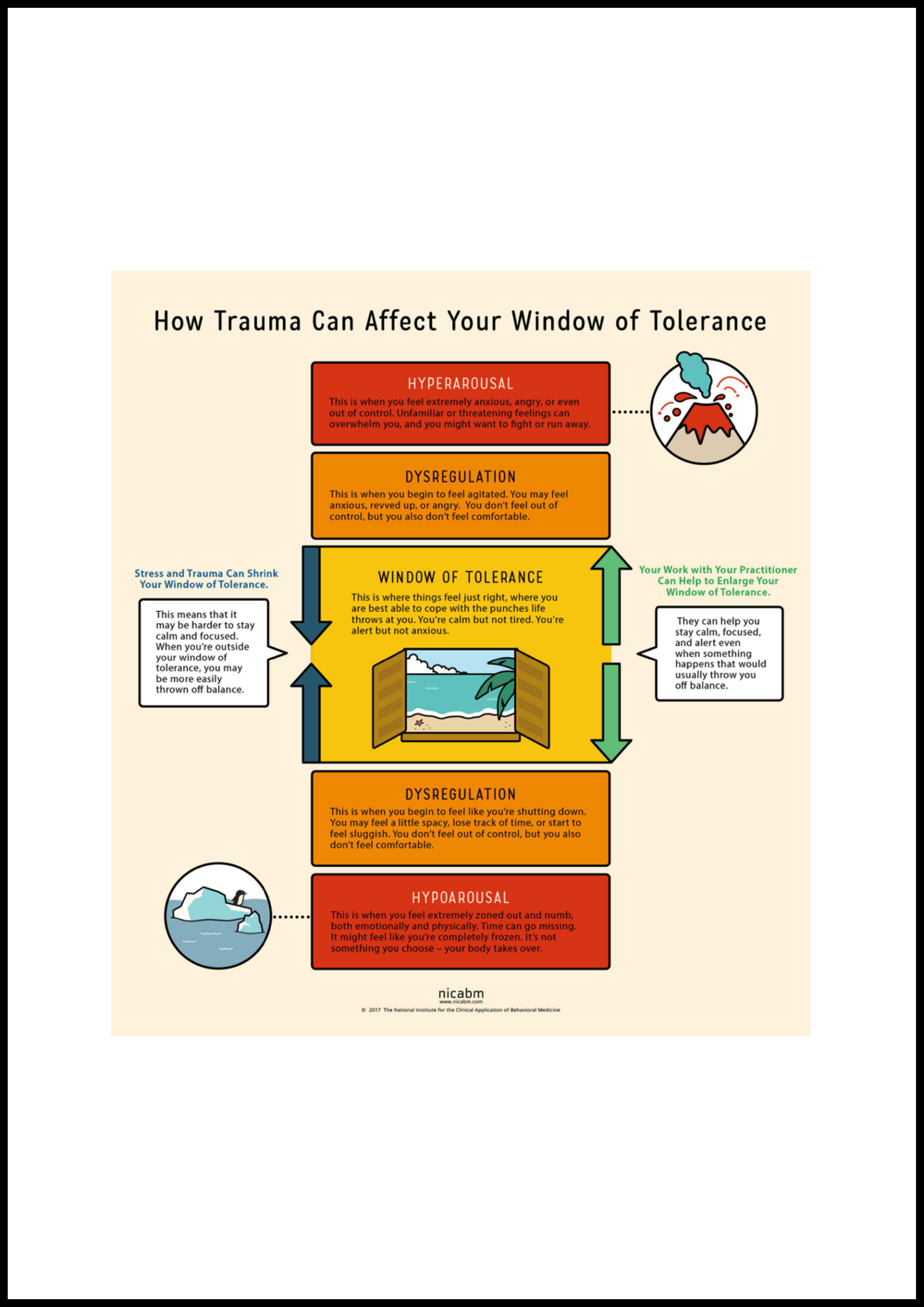
The window of tolerance is a concept from trauma therapy that refers to the optimal zone of arousal where a person can function effectively, even when faced with stress. Within this window, individuals are able to process emotions, think clearly, and respond appropriately to challenges. When someone is inside their window of tolerance, they are in a balanced state of regulation, neither too stressed nor too relaxed.
Outside the window, two extremes can occur: hyperarousal and hypoarousal. In hyperarousal, a person may feel anxious, overwhelmed, or hypervigilant, leading to impulsive reactions or panic. In hypoarousal, they might shut down, feel numb, disconnected, or depressed, lacking the energy to engage with their surroundings.
Trauma or chronic stress can shrink a person's window of tolerance, making it harder to stay in this optimal state. Therapeutic approaches like mindfulness, grounding techniques, and somatic therapies can help widen the window of tolerance, allowing individuals to manage stress more effectively and stay present. Developing this capacity is essential for emotional regulation and overall well-being.
Videos that relate to Understanding Trauma and Abuse
Downloadable Resources
Window of tolerance