
Pride Month: Celebrating Identity, Courage and Community
Recognising the past, celebrating the present, and creating a future where everyone belongs.
by Jonny,
Looking after your mental health during Pride season
With its focus on equality, acceptance and embracing everything that makes LGBTQIA+ people, culture, history and achievements special, the celebrations and events central to Pride season officially kicks off in June each year.
By bringing LGBTQIA+ people together as a unifying force striving for this community’s rights and equality, the sense of belonging that Pride fosters can have a hugely positive impact on people’s mental health. However, it also comes with its own set of obstacles that can make it tricky to navigate.
To help you get the most out of this Pride’s programme of events throughout June, July and beyond, we pinpoint Pride’s origins, examine why it’s still needed, explore how it benefits LGBTQIA+ mental health and provide tips on navigating challenges the season can bring.
What is Pride month?
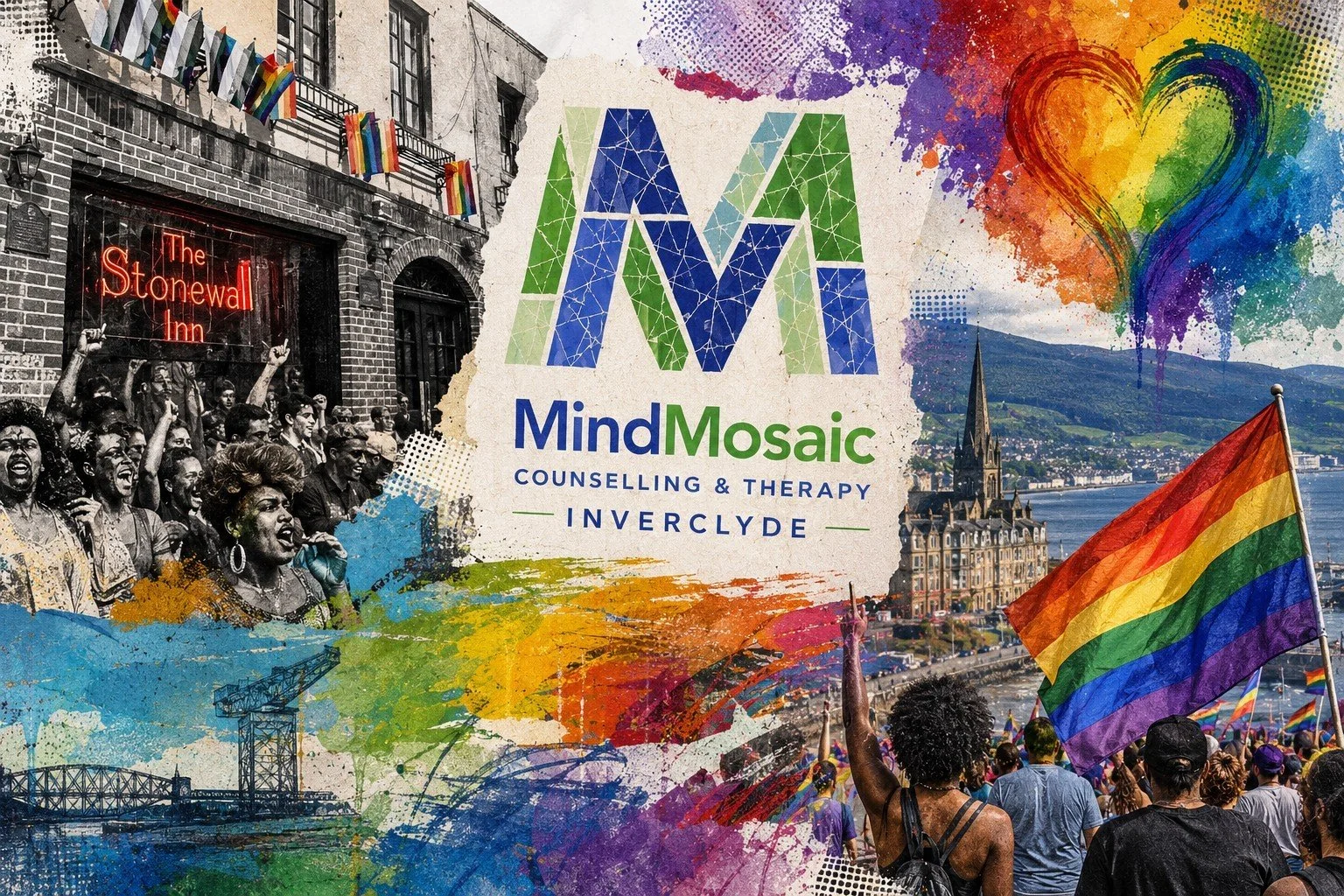
Pride season starts in June each year and celebrates all things LGBTQIA+ community and culture. It was created to honour and celebrate the Stonewall Inn protests which took place on 28 June 1969 in New York.
This first Pride was a riot. It saw activists – spearheaded by transwomen of colour – take a stand against police raids on the Big Apple’s gay bars and the discrimination that the LGBTQIA+ community experienced daily. These protests were a clarion call for the need for LGBTQIA+ rights.
The UK’s first Pride march happened in London a few years later in July 1972. And with the passing of each year, the number of Pride events has continued to flourish worldwide.
Each Pride season not only marks the significance of the Stonewall riots and the bravery of those who stood up, it’s also a nice way to celebrate how far the LGBTQIA+ community has come while reinforcing the need to continue advocating for it rights and equality.
LGBTQIA+ mental health
Research by LGBT Health and Wellbeing found that LGBTQIA+ people face higher rates of mental health problems, including depression, anxiety, stress, suicide, and self-harm.
More than half (54%) of participants in NHS Scotland’s 2022 LGBT+ Health Needs Assessment reported poor mental health, while 73% said they experienced loneliness or isolation.
The main cause of the mental health difficulties experienced by LGBTQIA+ people stems from the way society treats them, not their identity. Experiences of discrimination and stigma all contribute to a concept known as minority stress, which explains how prejudicial treatment, exclusion and negative social attitudes harm LGBTQIA+ mental health.
Why do we still need Pride?
Although the LGBTQIA+ community has made significant strides in securing the rights and freedoms of its members, the UK’s current political landscape – which has shifted focus on transgender and non-binary identities – has reinforced why Pride is still needed today.
Recent significant changes include the Equality and Human Rights Commission’s laying of its draft Code of Practice, which, if laid, could greatly impede how trans and non-binary people access spaces and services.
The UK has also fallen to 22nd place (out of 49 in Europe) in the Rainbow Map Index of LGBTQ+ Equality, despite country UK ranking 10th and 1st in 2021 and 2015 respectively.
The social and political developments over the last year highlight the pressures that LGBTQIA+ in the UK are having to adapt to – as well as the continued need for Pride.
How Pride can positively impact LGBTQIA+ mental health
Living against the above-mentioned backdrop of increasingly discriminatory surveillance is negatively impacting LGBTQIA+ people’s mental health. Pride events, however, can actively benefit LGBTQIA+ people’s mental health in several ways.
Create a sense of community
Whether it’s marches, meetings, club night or book clubs, Pride events foster inclusion and community. Taking part can help LGBTQIA+ people establish relatable connections and friendships that can help combat feelings of loneliness and isolation.
Affirm identity
Pride is an opportunity for people to be their authentic selves and celebrate the joy that their LGBTQIA+ identity brings themselves and their community. Being surrounded and supported by a community honouring the spectrum of its uniqueness can greatly benefit mental wellbeing.
Provide representation
It can sometimes be difficult for LGBTQIA+ people to see themselves in everyday life. By placing the spotlight on this community, Pride season can act as a reminder to LGBTQIA+ individuals that they matter, are valued and are seen. This representation of people celebrating the joy of their LGBTQIA+ identities can help lessen feelings of shame and bolster feelings of pride and self-acceptance.
Allyship in action
Pride is a great opportunity for our friends, family members, colleagues and local community to show their support and rally together for the LGBTQIA+ community. With this allyship comes validation and a reminder that there’s a network of people out there who advocate and provide safe spaces for LGBTQIA+ people. This encouragement can help minimise feelings of exclusion and rejection that LGBTQIA+ can experience.
See or be a role model
From famous figures to everyday people living loud and proud, Pride season allows LGBTQIA+ people to witness members of their community live authentically. These celebrations empower LGBTQIA+ to share their stories, connect through similar lived experiences and show how they’ve navigated challenges. Seeing LGBTQIA+ people live openly can encourage others to be it.
Giving back to community
Getting involved in Pride events can provide a sense of purpose, gratitude and help foster new positive relationships and experiences. Not only this, the act of giving back can help boost self-confidence and encourage the release of feel-good hormones and endorphins.
How to look after your mental health during Pride season
Pride brings with it a whole host of mood-boosting and identity-affirming opportunities for connection, camaraderie and a collective striving forward for LGBTQIA+ rights and equality.
However, this celebratory season comes with its own set of challenges and expectations that can put extra pressure on LGBTQIA+ people’s mental health. For example, it may bring up difficult feelings for those struggling to come to terms with their sexuality or gender identity. Prejudicial opinions can also be more prevalent in the press, work, school, university and on social media during Pride too.
Below are some simple ways to look after your mental health during this season.
Practice mindfulness
Mindfulness can help you feel more present and grounded in the moment by helping to regulate our nervous system. Ways to practice mindfulness include meditation, yoga and breathing, which can all be used to benefit how we process our mood, emotions, thoughts, feelings without judgement for the benefit of our mental health. Visit our mindfulness and breath resources for more information.
Move your body
Exercise and movement in all its forms are a great way to boost mood and bust stress. But gaining the benefits of movement doesn’t only mean hitting the gym or getting your heart rate elevated. Just ten minutes of brisk walking can increase energy and mental wellbeing and alertness. Whether it’s walking the dog, cleaning, gardening or dancing, moving our bodies while doing things we can enjoy are easy ways to improve mental and physical health.
Sleep well
Benefits of good sleep include mood boosting, stress reduction and balanced emotions and mental and physical wellbeing. Failing to catch quality z’s can contribute to mental health conditions, including anxiety and depression. To ensure a peaceful slumber, try to create a relaxing sleeping environment and aim for 7-9 hours of sleep a night. Read the NHS’s advice for practical tips on improving your sleep hygiene.
Eat a balanced diet
When feeling low or looking for a pick-me-up, our favourite comfort food can help us feel better. A treat here and there can be a simple way to practice self-care. However, aiming for a nutrient-filled and balanced diet – containing plenty of vegetables, fruit and water – the majority of the time can be beneficial to mental and physical health.
Talk to loved ones
Being open and honest with friends and family can be useful in discussing the issues you’re finding difficult and can help provide perspective on things. Giving yourself the space to talk about your mood and emotions can prevent things from building up. Make an effort to see loved ones if you’re finding Pride season difficult.
Practice self-compassion
When we don’t know why we’re feeling the way we do, it can be useful to draw attention to our emotions without getting frustrated with or criticising ourselves. Practicing being non-judgemental when we’re feeling low, frustrated or stuck can help make being kinder to ourselves become a habit. Focus on the things you’ve achieved and that you’re proud of. Prioritise self-care by doing the things you enjoy – whether it’s tuning into your favourite film, music or podcast.
Enjoy your Pride season
As well as being a catalyst for change for LGBTQIA+ equality, Pride is a reminder of the power this community has in fostering connection, solidarity and hope for the future.
We wish you a wonderful and safe Pride season and hope you spend it with your loved ones doing the things that bring you joy.
If you’re looking for extra support, please reach out to MindMosaic and the services listed below.