Winter is Coming!

by Kathryn,
Autumn is here and, in nature, it is a time of preparation. Animals store food, build cosy dens to stay safe from the cold, wet winter weather, and allow themselves time to rest after a busy summer before the frantic activities of spring begin. In Scotland, when the weather turns, we say "coorie in", meaning to snuggle together for warmth, comfort and protection.
What can we learn from nature and our traditions about looking after ourselves?
This year, I took some time out from work and spent it in my garden, swimming in the sea, connecting with family and friends, and doing a little travelling around Scotland. For me, it was a chance to pause, to offer myself the opportunity to rest and relax, to let go of rushing and busyness, and to simply go with the flow.
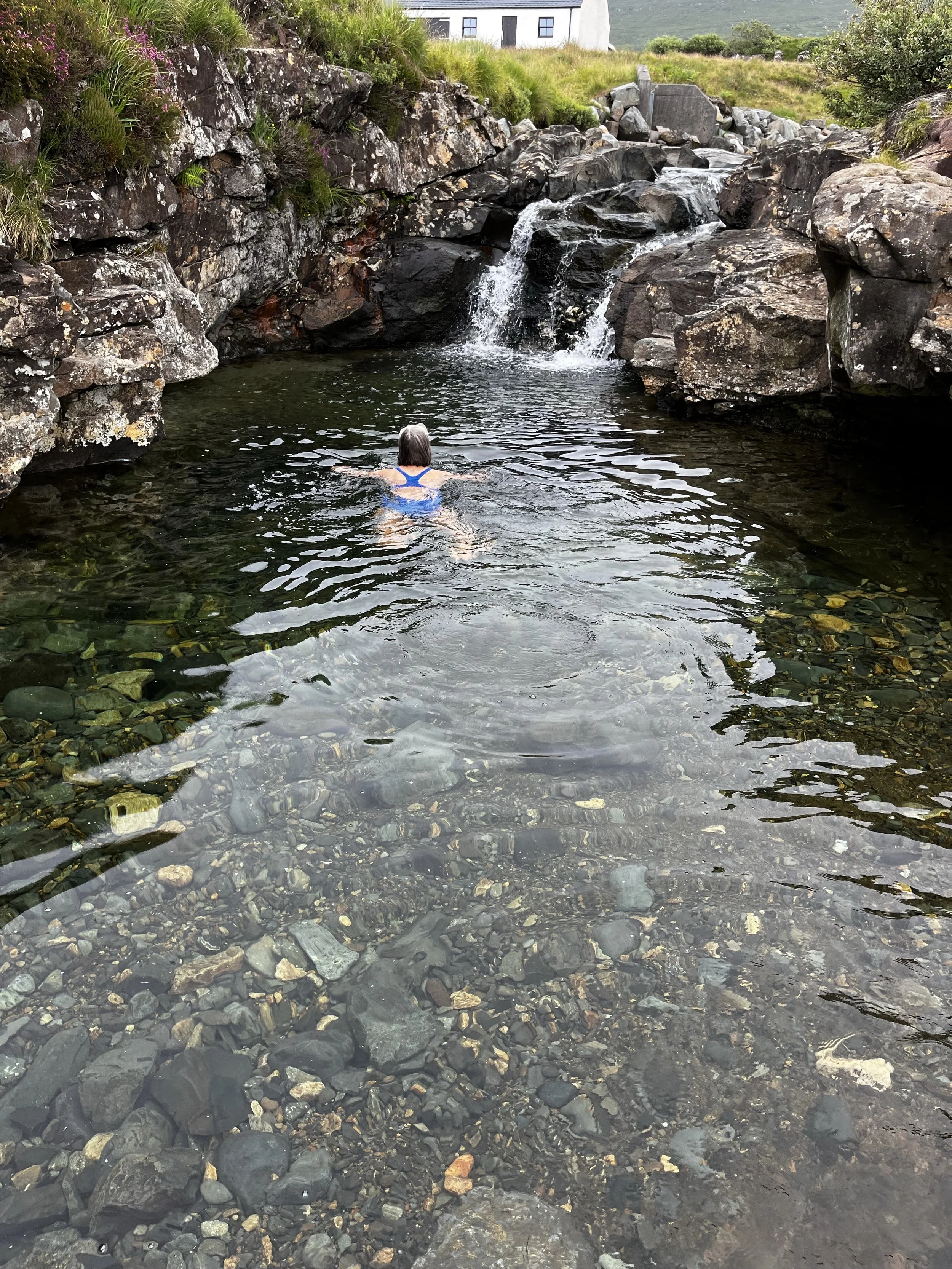
During a few days on Arran, I quite literally went with the flow as I floated downstream in the river that runs through Glen Rosa. The feeling of freely floating downstream has stayed with me. As a mindfulness practitioner and teacher, I often return to that memory of completely letting go: letting go of breath, letting go of becoming caught up in thoughts and thinking, letting go of what has been and what is yet to come, and resting fully in the present moment.
So, back to my original question: how do we look after ourselves? How do we prepare for the difficulties and storms that are part and parcel of being human? Do we simply fire-fight when challenges arise, or do we learn from nature and actively prepare? And if so, what might that preparation look like?
For me, mindfulness practice is one way of caring for myself. Through awareness of the breath and body, I am better able to live in the here and now, rather than constantly ruminating on the past or worrying about the future. Mindfulness also helps me live with greater ease and compassion when faced with difficulties, whether those difficulties are challenging emotions or circumstances that I am unable to change.
I have also noticed that connecting with others in my community helps me feel less isolated. Over the last few years, I have started swimming in the sea with others rather than counting how many lengths I can swim in a pool. Not only do I benefit from the fresh air and exercise, but I also enjoy the sense of belonging that comes from being part of a group. We may be shivering, but we are shivering together!
What would it be like to explore opportunities for connection within your own community? Choirs, gardening clubs, exercise groups, cooking classes; I have come to realise how much I gain from participating in activities like these. I notice I smile more, feel more connected and have more to talk about.
The well-known mindfulness teacher Vidyamala Burch OBE has developed a programme called HEALS. In this programme, she describes five key pillars of whole-life health. Unsurprisingly, mindful awareness is one of those pillars. Alongside it sit movement, nutrition, sleep and love, encompassing compassion for ourselves, others and the natural world.
As I write this, a storm is raging outside. Wind and rain batter against my window, and floating down the river in Glen Rosa feels like a distant memory. Yet that time spent resting and relaxing restored my energy and allowed me to return to work with renewed enthusiasm.
Can we learn from the creatures that are scurrying around preparing for winter and build habits into our daily routines that nourish and nurture us? Habits that help us become more resilient to whatever storms life may bring our way?